Bookkeeping

  • Personal Tax Accountant Denver

    personal accountant

    Getting referrals from your co-workers, friends or family members is another option, but they likely are facing a different tax or financial situation from you. There are many tax pros out there ready to help with an annual return, tax planning and more. But it can be hard to know whom to trust with your most sensitive information. Our partners cannot pay us to guarantee favorable reviews of their Accounting for Churches products or services.

    Tax Preparation

    The payroll golden rule of accounting is applicable to personal accounts as well. Look for an accountant with accredited credentials such as CPA (Certified Public Accountant) or CMA (Certified Management Accountant). Also evaluate their experience in the field handling similar tasks.

    Welcome to Anthony C. Leone Certified Public Accountants

    • Thanks to the internet, it's easier than ever before to find out what others think about a particular accountant or firm that provides accounting services.
    • There several accounting software options you can use to run your accounting services.
    • For example, you may avoid tax altogether if the gift is a property and the recipient intends to use it immediately.
    • Plus they can also provide tailored advice on business decisions as well as saving strategies that are tailored specifically to your individual needs.
    • Busy doctors have more time to spend with patients when we oversee their accounting processes.
    • Look for an accountant with accredited credentials such as CPA (Certified Public Accountant) or CMA (Certified Management Accountant).

    That includes filling all the personal accountant necessary tax forms, helping with a business plan, evaluating loan offers, offering tax advice and so much more. A strategic move towards creating an ecosystem for the accounting industry offering a unified suite of services. Consider how changes to legislation may impact the way you file. For example, when the Tax Cuts and Jobs Act (TCJA) went into effect on Jan. 1, 2018, it made some sweeping changes to the tax code.

    personal accountant

    When You’re Planning for the Future

    The K-1 states all dividends, incomes, and losses and shifts tax liability. That means that, instead of the business being liable, the partners who hold an interest in it take responsibility and accountability if something goes wrong. Hiring a personal accountant is probably a smart idea at that point. However, hiring a personal accountant when someone doesn’t have the time for tax isn’t just a time-saving tactic.

    Karen Echeverria Income Tax & Accounting Services

    personal accountant

    Our team of highly skilled and experienced personal tax accountants is dedicated to providing you with top-notch services that are tailored to your unique financial situation. With our comprehensive range of personal tax services, we aim to make the tax season stress-free and help you achieve your financial goals. We provide comprehensive tax preparation services for different types of taxes, such as gift tax, non-profit tax, individual tax, business tax, estate/ trust tax, and multi-state taxes. We also review your financial statements to identify tax deductions and minimize your tax liability.
    personal accountant

    personal accountant

    Our goal is to help individuals and small business owners achieve a "Perfect Balance" in every day finances. A good CPA should be able to analyze your specific tax situation and look for ways to help you save money on your taxes. We are confident that Denver Tax Group is the best personal tax accountant Denver has to offer.

    They offer a wide range of high-quality tax services, including income taxes and corporate rates in Canada. They also have the expertise you need to make informed decisions with your finances! They help Canadian taxpayers with U.S. reporting and filing requirements and theU.S. Cheaper isn't always better – especially when it comes to selecting a personal accountant! Be sure that you understand how fees are calculated up front so there won't be any surprises down the road.


  • #1 Outsourced Accounting, Tax, and Bookkeeping Firm

    outsourced bookkeeping company

    Lessons learned on how top firms grow fast, build stronger teams, and increase profit while working less. The Executive plan is available with custom pricing for firms with more complex needs. As an addition, you get access to lower credit card transaction fees, pre-authorized debit transaction fees, and many other benefits. FreshBooks comes with 2 basic plans to meet the needs of different business types and sizes. Record Keeping for Small Business Whether you’re a small or growing business, you can benefit from FreshBooks’ top features without breaking the bank.

    outsourced bookkeeping company

    Seasonal or Cyclical Businesses

    outsourced bookkeeping company

    We follow a cloud-based accounting portal and automated process that ensures faster response time, timely deliveries and data accuracy. We integrate existing accounting software into our systems as retained earnings balance sheet well, such as Intacct, Great Plains, Peachtree and QuickBooks. Most importantly, our services reduce clients’ workload by replacing manual and outdated bill collection. We also submit functions with an automated system that complements our clients’ business requirements.

    • Outsmart your competitors by adding highly skilled accounting professionals to your firm faster.
    • This knowledge can assist in streamlining financial operations and reducing the risk of errors and anomalies.
    • You won’t have to worry about their insurance, benefits, or training.
    • It helps in managing finances efficiently, ensuring compliance, and allowing businesses to focus on core activities as well as ensuring you have the right expertise to manage your business finances.
    • Offshore Accounting & Taxation Services can assist in optimising your processes after evaluating your current ones.

    Your scalable outsourced accounting solution

    • You canfocus on growing your business and making data-driven decisions while your outsourced team handles your every accounting need.
    • If you would like more information about how we can help your business grow, please contact us.
    • Business owners have to use Bench’s proprietary software, which could make it hard to move to another provider in the future.
    • Outsourcing your bookkeeping task to a reputed firm like Outbooks, you can focus on your company's growth rather than worrying about complex financial transactions.
    • It not only improves efficiency but also reduces the pressure on the business owner, allowing for better focus on growth and strategy.
    • The Premium plan ($399 a month if billed annually or $499 billed monthly) adds tax advising services, end-of-year tax filing, and financial strategy planning.

    A bookkeeping firm manages your financial data remotely using cloud-based accounting software like QuickBooks or Xero. Outsourcing bookkeeping services to the Philippines can offer several benefits to your business. Firstly, the Philippines is home to a large pool of highly skilled and experienced bookkeepers who are well-versed in the latest accounting software and practices.

    outsourced bookkeeping company

    Manhattan NY Tri State Area Business Accountant

    outsourced bookkeeping company

    Smart companies are using outsourced bookkeeping outsourced bookkeeping company services to cut costs, tighten their accounting, and stay tax-ready without hiring a full accounting department. Ultimately, it can benefit your business by freeing up your time and ensuring your books are up to date. This puts your business in a solid position come tax time and helps you keep a finger on the pulse of its financial state. You might say that areas of accounting and bookkeeping must be done internally due to the job’s sensitivity.

    • Ltd. (OATS) has been dedicated to offering world-class finance and accounting outsourcing solutions.
    • If you operate a small business and wish to outsource your books, outsourced accounting is a possibility.
    • Outsourced bookkeeping works by delegating your business’s financial management tasks to external professionals or firms specializing in bookkeeping and accounting services.
    • Firm Forward is a guide for accounting firm leaders looking to add a global team to their business or have already done so.

    When everyone has access to current data, it facilitates conversations around budget and what people need. Doing payroll on QuickBooks Online and QuickBooks Payroll has saved me so much time, because it is very intuitive and easy to use. Contact Credfino for a custom quote tailored to your unique needs and desired level of engagement.

    Plans start at $50 per month with the Monthly Updates plan for 5 hours of support each month and range up to $200 per month with the Daily Updates plan, which includes 20 hours of support a month. Paro begins the process with an introductory call to learn about the scope of work your firm needs. Then, they connect you with a professional from their network with the right expertise for the job. However, while your outsourcing partner can prepare these statements to save you time and resources, you will likely review them for accuracy before passing them on to your clients.

  • Chart of Accounts-Net Assets

    net assets nonprofit

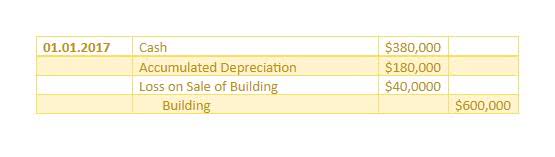
    Understanding and adhering to these regulations is essential, as failure to comply can result in penalties or loss of tax-exempt status. The systematic allocation of the cost of an asset from the balance sheet to Depreciation Expense on the income statement over the useful life of the asset. (The depreciation journal entry includes a debit to Depreciation Expense and a credit to Accumulated Depreciation, a contra asset account). The purpose is to allocate the cost to expense in order to comply with the matching principle.

    net assets nonprofit

    Purpose in Financial Reporting

    Temporarily restricted net assets are funds that donors have earmarked for specific purposes or projects, but only for a limited period. For example, a donor might specify that their contribution be used for a particular program within the next fiscal year or for a capital project that will be completed over several years. The temporary nature of these restrictions requires careful tracking and reporting to ensure compliance with donor intentions. Organizations often use these funds to support targeted initiatives, such as research projects, scholarships, or community outreach programs.

    net assets nonprofit

    Client Accounting Services

    net assets nonprofit

    The second category, net assets with donor restrictions, includes funds designated for specific purposes or timeframes. Donors may require contributions to be spent only on certain programs or stipulate that the principal amount be maintained indefinitely while only the investment earnings are used. Endowments are a common example, where the original donation remains intact while the generated income supports ongoing activities. Organizations must carefully track and report these funds to ensure compliance with donor agreements. The management of endowment funds also involves adhering to legal and regulatory requirements, such as the Uniform Prudent Management of Institutional Funds Act (UPMIFA). This act provides guidelines for the investment and expenditure of endowment funds, emphasizing the need for prudence and care in managing these assets.

    • To achieve accurate financial reporting, many nonprofits turn to specialized nonprofit accounting solutions.
    • Most importantly, nonprofit leaders need to communicate and understand these calculations over time to gain insight into their financial trends.
    • It also helps them assess the organization’s cash flow management and make informed decisions regarding funding and investments.
    • Long term liabilities contain the long term payables, such as mortgages, or loans.
    • Conversely, limited or diminishing net assets may signal financial distress, prompting a need for strategic adjustments to secure the organization’s future.

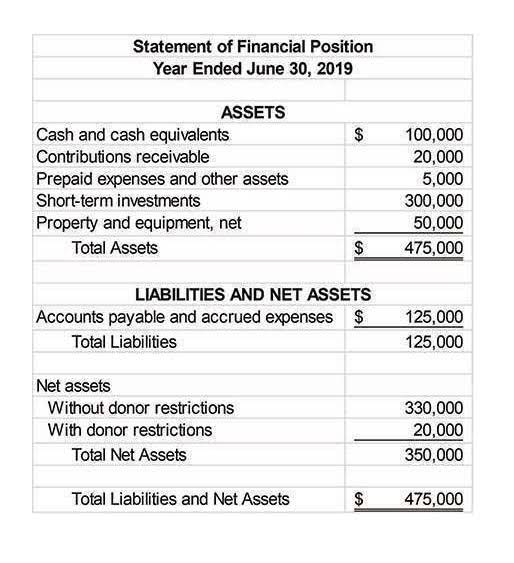
    Statement of Financial Position Breakdown

    Accurate categorization between restricted and unrestricted net assets enhances transparency and trustworthiness among stakeholders. By aligning fund usage with donor expectations, nonprofits can maintain credibility and foster long-term relationships with their supporters. To better understand donor contributions and their impact on nonprofit net assets, tools like a donor dashboard can provide valuable insights. They represent the organization’s financial resources and are essential for supporting its mission, ensuring the appropriate use of donations and grants, and providing transparency to stakeholders. Small and midsize nonprofit organizations typically do not have net assets that are restricted permanently, such as endowments, and it is usually not advisable for them to do so.

    Premium Investing Services

    The personnel expense ratio simply measures the personnel costs of producing revenue. Misinterpreting these liabilities can lead to an inaccurate assessment of your immediate financial obligations. A large net assets figure could give the impression that your organization has ample resources readily available. Accounting for nonprofits takes a different mindset compared to for-profit accounting, and there is scope for misinterpretation if undertaken by someone who doesn’t have the right skills and experience.

    Endowment Funds and Permanently Restricted Net Assets

    Nonprofit organizations often receive unrestricted funds, which are donations not limited by donor stipulations. These funds are integral for covering operational expenses and investing in areas crucial for achieving the organization’s mission. Conversely, unrestricted funds are contributions without donor-imposed restrictions and can be allocated at the discretion of the nonprofit’s management. These funds offer invaluable flexibility to the nonprofit, allowing it to meet various operational needs including, but not limited to, administrative expenses, program funding, and contingency planning. Adherence to standards such as those set by the Financial Accounting Standards Board (FASB) and the International Financial Reporting Standards (IFRS) ensures consistency and credibility across the sector. For instance, the FASB’s ASC 958 provides guidelines for nonprofit financial reporting, ensuring clarity in financial statements.

    • This transparency is crucial for maintaining donor confidence and ensuring that the organization is accountable for the proper use of restricted funds.
    • Internal Revenue Service, a nonprofit organization may be granted tax exempt status.
    • Unlock the full potential of your nonprofit’s financial health with Good Steward Financial services, where we strive to be good stewards of our community every day of the year.
    • Temporarily restricted net assets are funds that have been designated by donors for specific purposes or time periods.
    • Also that’s the way we’ve always said it until a recent accounting pronouncement introduced the new language.
    • Equity is a measure of the value that shareholders have in the company, reflecting their stake in its financial success and growth potential.
    • In for-profit entities, equity represents the owners’ residual interest in the company after liabilities are deducted from assets.

    This is where the importance of regularly reconciling business accounts comes into play. Regular reconciliation helps in keeping track of the financial health of the organization. If the noncompliance result from an NFP’s failure to maintain an appropriate composition of assets in amounts needed to comply with all donor restrictions, the amounts and circumstances shall be disclosed. Your Change in Net Assets is the difference between the revenue you have recorded and the expenses incurred during a given period. In addition to the common size analysis, analysts may also use other methods such as ratio analysis and trend ratios to further analyze the organization’s financial trends and performance. Essentially assets The Key Benefits of Accounting Services for Nonprofit Organizations are what your organization owns and liabilities are what your organization owes.

    By implementing these best practices, nonprofits can effectively utilize and manage their unrestricted net assets, contributing to their overall financial stability and long-term sustainability. Current assets are the most liquid assets that a non-profit organization possesses. It is important for non-profit organizations to closely monitor their current assets as they provide a measure of the organization’s short-term financial health. The core purpose of your nonprofit balance sheet is to provide a clear understanding of your nonprofit’s financial health and your ability to deliver your mission. An accurate and transparent nonprofit balance sheet, or nonprofit statement of financial position, is the perfect opportunity to showcase your organization’s financial acumen and build donor trust.

    net assets nonprofit

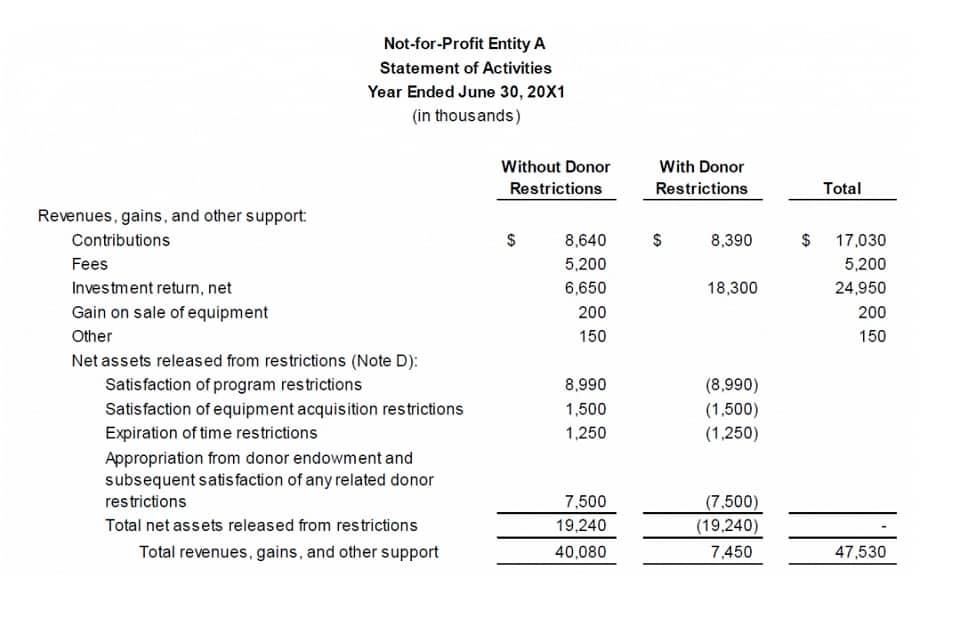
    Understanding a non-profit organization’s balance sheet is essential for assessing its financial health and stability. By analyzing key components and interpreting financial ratios, stakeholders can gain valuable insights into the organization’s liquidity, debt obligations, and net asset composition. This article provides a comprehensive overview https://nerdbot.com/2025/06/10/the-key-benefits-of-accounting-services-for-nonprofit-organizations/ of key considerations when analyzing a non-profit organization’s balance sheet. When managing net assets released from restrictions, nonprofits must adhere to specific accounting practices to ensure transparency and accuracy.

  • Salary Calculator With Overtime

    how to calculate overtime pay

    For more additional assistance, check out our free overtime calculator. In case an employee requests to perform their work remotely, the employer must specify their working hours. The worker has the right to have one or more breaks, if he works five consecutive hours.

    How to calculate overtime pay for hourly-rate employees

    Since the straight-time earnings have already been calculated (see Step how much is overtime pay 1), the additional amount to be calculated is one-half the regular rate of pay. Always check to ensure calculations comply with both federal and state law. Certain types of other compensation, such as the following, must be included in overtime calculations. In addition to the federal regulations set by the FLSA, many states have their own overtime laws that provide additional protections for employees. Or, if you want to see your overtime rate multiply at maximum speed, use your overtime wages to pay off high-interest debt and then redirect that paid-off debt payment into an investment.

    Using Bonuses to Meet the Salary Level (10% Rule)

    Be sure to correctly determine the exempt status of their employees to ensure compliance with overtime regulations. Misclassification can result in legal consequences and potential financial liabilities for the employer. It’s important that you understand how to factor in all compensation, including bonuses or commissions, to accurately determine your regular rate of pay. We will provide step-by-step instructions and examples to help you accurately calculate overtime pay for different scenarios. This is your gross overtime wages for the number of hours entered above, multiplied by the number of payroll periods in the year.

    how to calculate overtime pay

    Business

    Overtime typically applies to nonexempt employees, who are entitled to receive overtime pay for hours worked beyond the standard 40-hour workweek. Department of Labor�s regulations prevents an employer from paying an employee at or above the minimum wage or at a higher overtime rate of pay. In addition, a number of states have enacted minimum wage and overtime pay laws, some of which provide greater worker protections than those provided by the FLSA. In situations in which an employee is covered by both Federal and state wage laws, the employee is entitled to the greater benefit or more generous rights provided under the different parts of each law. More information about state laws may be found through the state labor offices. �Nonexempt� means that the covered employee is entitled to the law�s minimum wage and/or overtime requirements.

    how to calculate overtime pay

    Professional Exemption (Creative Professional)

    • When bonuses and commissions are part of an employee’s earnings, they must be included in the calculation of the employee’s regular rate for determining overtime pay.
    • You must pay at least the minimum for overtime, but you may decide to pay employees at a higher rate, and for overtime starting at lower hours per week.
    • Overtime pay is extra compensation for employees who work more than 40 hours a week.
    • To qualify for overtime compensation, the employee must be non-exempt under the Fair Labor Standards Act (FLSA).
    • The FLSA does not require extra pay for work on weekends or nights in the US.
    • Once the correct regular rate of pay for the workweek is determined, calculating the overtime premium is relatively straightforward.
    • This functionality allows you to visualize the full impact of your hard work on your monthly income.

    Accurately understanding and applying overtime calculations in the US remains crucial for adhering to the Fair Labor Standards Act (FLSA). This essential aspect of payroll management not only ensures legal compliance but also upholds the rights of employees to fair compensation for their work beyond regular hours. By leveraging reliable sources and the latest information, this guide aims to simplify the complexities surrounding overtime eligibility, calculation methods, and the latest guidelines. The regular rate of pay includes the employee’s hourly wages, as well as any additional compensation such as bonuses or commissions. Employees can be scheduled to work up to 40 hours per week as standard scheduling. If an employee works over 40 hours, he or she is working overtime hours and will be accounting paid a higher rate for this time.

    how to calculate overtime pay

    Compute the “hourly regular rate of pay” by dividing the “total remuneration” paid to an employee in the workweek by the number of hours in the workweek for which such compensation is paid. In most countries, the standard overtime rate is 1.5 times the regular hourly rate (time-and-a-half) for hours worked beyond 40 per week. Some states/countries may require double time for holidays or excessive overtime. It’s calculated by dividing the total pay for employment in any workweek (except statutory exclusions) by the total number of hours actually worked. In most cases, overtime pay is only applied when an employee works more than 40 hours in a workweek. However, there may be state-specific laws or collective bargaining agreements that require overtime calculations on a daily basis.

    • This comprehensive guide explains how to calculate overtime for monthly salary employees, including tax implications and examples to clarify the process.
    • Some employers, for example, pay "double time" (twice the normal hourly rate) for holidays.
    • Consider Emily, who works in sales and earns a base rate of $18 per hour.
    • Encourage employees to prioritize tasks and delegate effectively to avoid overburdening individuals.
    • If it's not filled in, please enter the title of the calculator as listed at the top of the page.

    how to calculate overtime pay

    Now that we know how to use this overtime paycheck calculator, let's explore the details of such calculations next. Job titles alone do not determine exempt status; it depends on the specific job duties and salary. Each category of exemption has its own set of tests that need to be met. Effective record-keeping for overtime with Connecteam ensures that you’re not only rewarding your employees appropriately but also safeguarding your operations against any compliance issues.

    How to calculate overtime pay for salaried employees

    Here’s how to apply this formula to hourly employees, non-exempt salaried employees, and employees who’ve received a bonus or work on commission. It is subject to federal and state income taxes, as well as Social Security and Medicare taxes. While there have been proposals to "cut taxes on Cash Flow Management for Small Businesses overtime pay," these changes are not yet law as of this writing. Overtime pay is the extra money an employee gets for working more than the usual number of hours in a workweek. To qualify for overtime compensation, the employee must be non-exempt under the Fair Labor Standards Act (FLSA).

  • The CAPP Professional Credential

    We discover some of the challenges Accounts Payable can face with each classification. We identify the most critical components of the vendor’s invoice and discover solutions on how to address the issue of missing data. We explore the risks of processing the same invoice more than once and what can be done to mitigate this risk. We also identify the difference between a accounts payable accounting coach duplicate invoice and a duplicate billing. Discussions include explanation of the accounting transactions resulting from the posting of an invoice, by type, and the posting of a credit memo.

    These tasks are highly manual and error-prone, making them ideal for early automation. Once stabilized, expand to include payments, vendor portals, and reporting dashboards. Centralized dashboards give AP and finance teams a live view of pending, approved, and paid invoices. A clearly defined accounts payable filing system is the foundation of an efficient AP process. Organize invoices by vendor, due date, or payment status (e.g., pending, approved, paid).

    Vendor invoices without purchase orders or receiving reports

    The Certified Accounts Payable Specialist programme equips learners with specialist knowledge and skills which are required for a successful career in AP. Click here for more information on the complete how to stop drinking course. In this blog, we’ll cover 10 actionable ways to organize your AP process and lay the foundation for efficiency, visibility, and future automation. Receive instant access to our entire collection of premium materials, including our 1,800+ test questions.

    • Documenting these issues gives you a baseline for future improvements and highlights where automation will drive the greatest impact.
    • A strong payment history can help when negotiating payment terms and solidify lasting partnerships between vendors and your business.
    • Accounts payable is the money a business owes to its vendors and suppliers for goods or services received.
    • The amount of insurance that was incurred/used up/expired during the period of time appearing in the heading of the income statement.
    • Companies must maintain the timeliness and accuracy of their accounts payable process.

    Automated systems extract invoice data using OCR or direct integrations, reducing the need for manual entry and copy-paste work, a major source of delays and errors. Invoices are scanned and automatically read using AI-powered data extraction. Key fields like vendor name, invoice number, and due date are auto-filled, eliminating manual entry and reducing errors. Tackling these challenges isn’t just about fixing inefficiencies — it’s about unlocking greater control, visibility, and value across your financial operations.

    Accounts payable are usually a short-term liability, and are listed on a company’s balance sheet. Accounts payable are usually due in 30 to 60 days, and companies are usually not charged interest on the balance if paid on time. For public companies, there’s a much easier way to find the end result instead of doing all the math yourself. Save yourself the time and effort and just review the company’s statement of cash flows, included with its financial statements. The statement of cash flows includes the cash impact of changes to accounts payable and accounts receivable, as well as every other material impact on cash from both the income statement and balance sheet.

    Fraud exposure

    Accounts Payable is also debited when a company returns goods to a vendor or when the vendor grants an allowance. The invoice terms indicate when an invoice becomes due and whether a discount may be taken if the invoice is paid sooner. The invoice terms also dictate the point at which ownership of goods will transfer from the seller to the buyer.

    Accounts payable is responsible for processing invoices and payments accurately and on time. This function helps control expenses by verifying invoices, ensuring compliance, and maintaining timely vendor payments to support strong financial operations. CFOs should centralize the accounts payable processes by embracing automation to streamline workflows and reduce manual tasks. Focusing on career development and implementing hybrid work models can also help improve retention and engagement for accounts payable teams.

    Qualifications include an assessment component in addition to course material, ensuring students are able to successfully demonstrate their knowledge and expertise. Upon successful completion, students will be recognised as qualified Accounts Payable professionals. Since Pacioli was a Franciscan friar, he might be referred to simply as Friar Luca. While Friar Luca is regarded as the “Father of Accounting,” he did not invent the system.

    Automated Credit Scoring

    When the existing accounts are not sufficient, new accounts should be added. In other words, meaningful financial reporting of transactions should not be limited to a preconceived list of accounts. Lastly, the documents should be stamped or perforated to indicate they have been entered into the accounting system thus avoiding a duplicate payment.

    • By switching to digital invoicing or scanning paper invoices into a centralized system, your team can retrieve documents with a few clicks instead of digging through piles of paper.
    • Late payments, inconsistent communication, and disorganized processes create friction with suppliers.
    • Included are discussions of the three-way match, early payment discounts, end of period accruals, and more.
    • Providing the right training and technology—like an AP automation solution—will position your accounts payable team for long-term success and job satisfaction.
    • Liabilities also include amounts received in advance for a future sale or for a future service to be performed.
    • It prepares learners for performing the role of an Accounts Payable professional from entry, up to and including management level.

    Limited scalability of manual AP processes

    Track processing cycle times, exception rates, discount capture, and approval delays. Use this data to identify bottlenecks, refine workflows, and scale automation into new functions. Continuous improvement is key — automation is not a one-and-done project, but an evolving part of AP strategy. Implementing AP automation isn’t just about adopting new software — it’s about building a scalable, structured foundation for long-term efficiency. To make automation successful, you need a clear plan that aligns with your business goals, minimizes disruption, and ensures cross-functional adoption.

    Sometimes the lease is in substance a purchase of an asset and a financing arrangement. Accounting software allows companies to sort its accounts payable according to the dates when payments will be due. This feature and the resulting report are known as the aging of accounts payable.

    When a vendor statement is received the details on the statement should be compared to the company’s records. To illustrate the three-way match, let’s assume that BuyerCo needs 10 cartridges of toner for its printers. BuyerCo issues a purchase order to SupplierCorp for 10 cartridges at $60 per cartridge that are to be delivered in 10 days.

    Under the accrual method of accounting, the company receiving goods or services on credit must report the liability no later than the date they were received. The same date is used to record the debit entry to an expense or asset account as appropriate. Hence, accountants say that under the accrual method of accounting expenses are reported when they are incurred (not when they are paid). Digital transformation is reshaping the accounts payable function, helping AP teams move beyond time-consuming manual tasks.

    Below is a step-by-step approach to help your finance team transition from manual processes to a streamlined, intelligent AP system. Without a centralized system, AP teams struggle to track the status of invoices, pending approvals, or outstanding liabilities. This lack of transparency weakens cash flow forecasting and makes it harder for finance leaders to make timely decisions. When approvals are routed manually, through email chains or physical documents, delays are inevitable. 44% of AP teams report significant approval bottlenecks, which lead to missed early payment discounts, late fees, and internal frustration across departments.

    Our training programs are presented in an engaging, interactive, hands-on style, and are led by veteran accounts payable management experts and practitioners. Insurance Expense, Wages Expense, Advertising Expense, Interest Expense are expenses matched with the period of time in the heading of the income statement. Under the accrual basis of accounting, the matching is NOT based on the date that the expenses are paid.

    The manual AP process can lead to data entry errors, duplicate payments, or incorrect vendor information. These errors can result in wasted resources and late payments that strain vendor relationships, adding to the workload of already stretched teams. Organizing accounts payable isn’t just about tidiness — it’s about control, accuracy, and scalability. If your team is still dealing with manual data entry, delayed approvals, or disconnected invoice workflows, HighRadius offers a smarter way forward. When automation tools already do most of the manual work, AP teams can focus on strategic tasks.

    A current asset which indicates the cost of the insurance contract (premiums) that have been paid in advance. It represents the amount that has been paid but has not yet expired as of the balance sheet date. A current asset whose ending balance should report the cost of a merchandiser’s products awaiting to be sold. The inventory of a manufacturer should report the cost of its raw materials, work-in-process, and finished goods. The cost of inventory should include all costs necessary to acquire the items and to get them ready for sale. As the expenses are used or expire, expense is increased and prepaid expense is decreased.

Pagina: 1 din 1

5 Item(s)